

Steve Ballmer + $DAKT + NBA and the trade

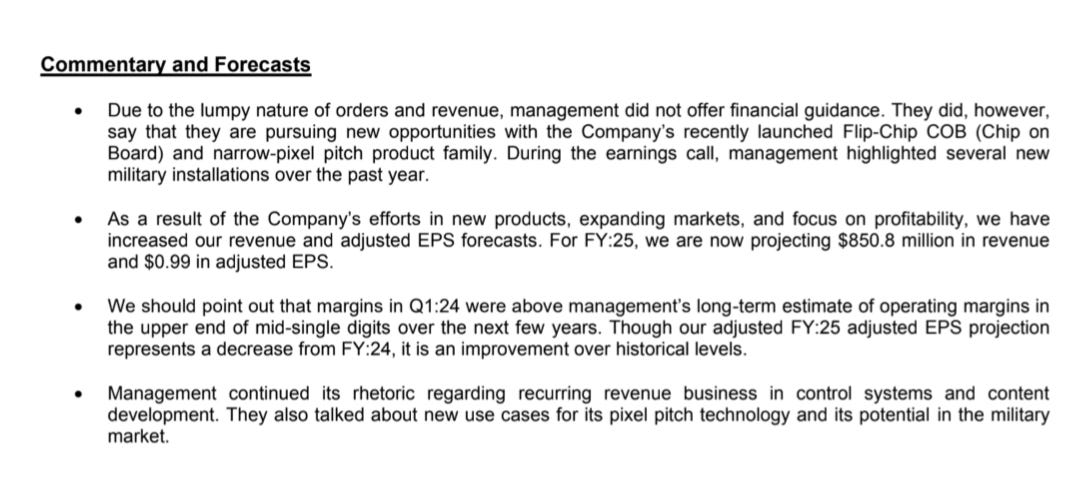
In 2024, I was asked to look into Daktronics, Inc. ($DAKT), a small‑cap electronics company best known for its large‑scale LED display technology. Public filings and investor materials made it clear they were in the midst of an active investor relations campaign, positioning themselves as a key vendor for next‑generation sports venues.
One of their flagship projects was the Halo Board at the Los Angeles Clippers’ new Intuit Dome. Daktronics designed and built what has been described as the largest double‑sided LED display ever installed in an NBA building, covering nearly an acre and integrating into the sight lines of every seat.
From my side, I recall meeting Daktronics’ leadership in person and participating in several conference calls. A recurring talking point was the technology behind the board: high‑density LED architecture, advanced control systems, and the idea that the display itself could become a monetizable platform for sponsorship, data, and fan engagement—exactly the kind of asset that fits into Steve Ballmer’s vision of a tech‑forward franchise.
Financial context: cash, scale, and sponsorship economics
By fiscal year ending April 2024, Daktronics reported roughly $81.3 million in cash and equivalents, with total cash and short‑term investments in the same range.
Around that period, the company’s market cap was in the hundreds of millions of dollars roughly $700–800 million depending on the date and price snapshot.
Against that backdrop, a direct, high end individual sponsorship for a superstar like Kawhi Leonard whose endorsement deals can reach into the tens of millions of dollars would be a material commitment for a company of Daktronics’ size.
Any such arrangement would show up as a meaningful line item in their marketing or promotional spend and would be visible, at least in aggregate, in their financial statements.
That’s why, from a capital‑structure perspective, it’s more plausible to think about indirect or structured sponsorship flows where a team, an arena project, and a vendor are all part of a broader commercial ecosystem than a simple, standalone “celebrity deal” funded entirely out of a mid‑cap vendor’s pocket.
If you treat this as a forensic problem, several layers need to be examined:
Vendor financials and cash flows
Label: Sponsorship spend vs. core operations
Detail: Track Daktronics’ marketing, sponsorship, and “other” expenses over time, looking for step‑changes coinciding with the Intuit Dome build‑out and Kawhi’s tenure with the Clippers.
Detail: Compare cash balances and operating cash flow to any large, recurring payments that could plausibly fund a multi‑million‑dollar endorsement.
Contractual relationships
Label: Team–arena–vendor chain
Detail: Map contracts between the Clippers organization, Intuit Dome entities, and Daktronics (to the extent public or discoverable), then overlay any personal services agreements with players.
Detail: Look for clauses that tie vendor compensation to player‑related marketing deliverables.
Disclosure and governance
Label: NBA and corporate reporting
Detail: Compare what was disclosed to the NBA, to shareholders, and to the public with what is now alleged—identify gaps, omissions, or inconsistencies.
Detail: Evaluate whether any arrangement should have been treated as team‑related compensation under salary‑cap rules rather than as a separate sponsorship.
Comparative cases
Label: Benchmarking against other star sponsorships
Detail: Examine how other teams and vendors structure star endorsements, especially where a player is tied to a building’s naming rights, scoreboard, or technology partner.
This kind of analysis would require access to non‑public contracts, internal emails, and payment records, plus cooperation from the Clippers, Daktronics, and any related entities. It’s not something that can be fully resolved from public filings alone, even though those filings provide important boundary conditions—like cash capacity and materiality thresholds.
Ballmer, service providers, and the trade lens
When you think back to the Kawhi Leonard trade from Toronto to Los Angeles, it’s widely understood that off‑court economics—sponsorships, market size, and long‑term brand value—were part of the appeal of moving to LA. On the Toronto side, there were sponsorship opportunities and a strong corporate base; on the Clippers’ side, there was Steve Ballmer’s willingness to invest aggressively in infrastructure, technology, and the overall “platform” around the team.
From that perspective:
Label: Strategic use of vendors
Detail: It’s not far‑fetched that Ballmer would leverage key service providers—like Daktronics to enhance the commercial environment around his stars, whether through legitimate, disclosed sponsorships or more complex arrangements now under scrutiny.
Detail: Given Daktronics’ size and cash profile, any large player‑specific deal would likely be structured carefully and might rely on the broader economics of the Intuit Dome project rather than pure “ad spend.”
Again, the line between innovative commercial structuring and salary‑cap circumvention is exactly what the NBA is now trying to draw.