

Vietnam in Persia (p.s Xi is not your friend)

Iran’s best chance is to turn any war with the U.S./Israel into “Vietnam in Persia” — suck the Americans into a long ground war, sacrifice huge numbers of soldiers, destroy their own country if necessary, and wait for American domestic politics to force a withdrawal.
This is a classic “asymmetric warfare” + “war of attrition” strategy.
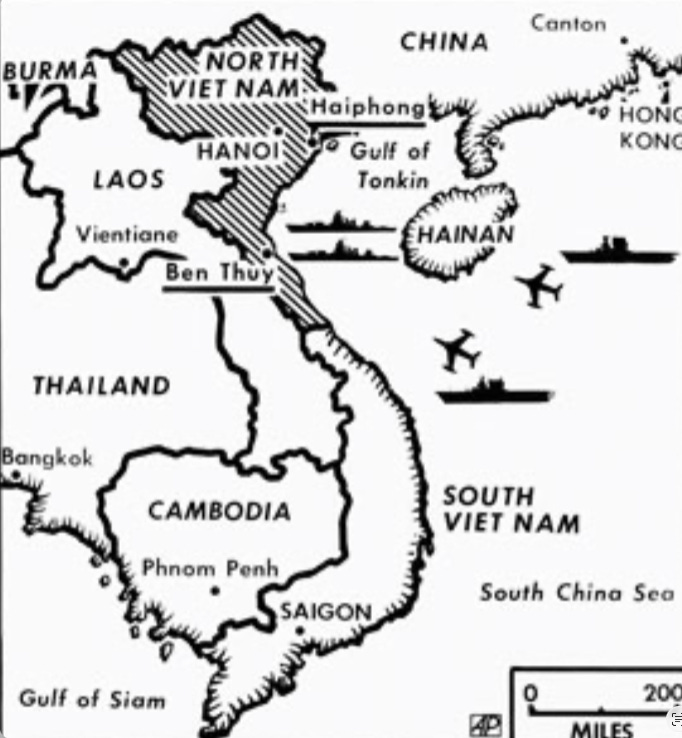
There’s a pattern here that’s too familiar to ignore.
When tensions concentrate around a narrow, strategic passage — like the Strait of Hormuz — history doesn’t just rhyme. It often repeats with disturbing precision.
Think of the Gulf of Tonkin incident.
An ambiguous naval encounter becomes a definitive justification.
Uncertainty is reframed as aggression.
Escalation becomes inevitable.
And suddenly, a nation is at war.
That’s the risk embedded in the current moment.
When you have a chokepoint like Hormuz, the conditions are perfect for narrative construction:
A provocation can be real, exaggerated, or manufactured
Attribution can be blurred in the fog of conflict
Response can be pre-aligned before facts are even established
At that point, the question is no longer what happened — it’s what can be justified.
The Incentive to Escalate
If this conflict drags toward July 4, 2026, the stakes shift beyond strategy into symbolism.
A nation founded in revolution celebrating its independence while engaged in a prolonged, optional conflict?
That’s not just bad optics — it’s historically corrosive.
The pressure builds in two directions:
End it quickly → secure a diplomatic win before the date
Escalate decisively → force resolution before the symbolism hardens
This is how timing itself becomes a catalyst.
Deadlines don’t just measure events.
They shape them.
Trade Was Never Separate
There’s also a deeper thread running through this.
Trade policy and military posture were never truly independent.
The idea that you could tolerate structural imbalances — cheap labor pipelines, industrial dependencies — while maintaining geopolitical leverage was always fragile.
At some point, those dependencies convert into constraints.
And constraints limit optionality in moments like this.